Alzheimers
Sepsis Alliance
Trevor Project
Suicide Prevention Hotline
Didi Hirsch Mental Health
Project HOPE
MHA graphic


Caregiver Logo Caregivers provide personal care services for those who are suffering from illness or injury of all ages, including pediatrics, geriatrics, life-long challenges, and those near end-of-life.

depression
Simpson Saves Lives

calendar icon
2026 ISSUE 3
SUBJECT LINKS
OUTSIDE OF BBPA
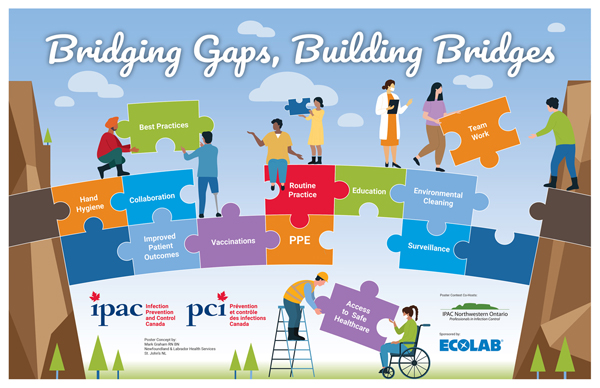
PATIENT SAFETY AWARENESS WEEK
MARCH 8-14, 2026
PATIENT SAFETY AWARENESS DAY
SPONSORED BY THE WORLD HEaLTH ORGANIZATION
SEPTEMBER 17, 2026
Barrybill Patient Advocate (BBPA) supports National Patient Safety Awareness Week (PSAW).

There is an activity for everyone. For example, highlight patient safety issues, spread awareness about the importance of patient safety, or showcase patient safety best practices that are used in your environment.

The Center for Patient Safety has provided flyers, poster, and two-folds that you may use to plan your activities. As a resource of information the World Health Organization developed strategies on avoidable harm and patient safety through year 2030.
Advertising Templates The Center for Patient Safety FOLLOW URL
Global Patient Safety Action Plan - Avoidable Harm World Health Organization DOWNLOAD
RARE DISEASES (CHOLERA)

Rare Disease Day is celebrated around the world to bring awareness of the impact diseases have on a community. In a country or region where a rare disease has been eradicated it may be referred to as rare; however, if a particular disease remains a public health burden it is not considered rare but prevalent. Cholera for most nations is rare but conflict, displacement, and climate-related disasters are disrupting

access to clean water and sanitation. Cholera outbreaks has become one of the most pressing global health emergencies.

The causative agent of Cholera, which can be found in contaminated water and shellfish, is the bacteria, Vibrio cholera. When ingested, the bacteria sticks to the walls of of the small intestine. There, they release toxins that can cause mild to severe watery diarrhea that can quickly lead to life-threatening dehydration.

If an infected person is unable to replenish fluids, cholera can be fatal. Access to clean water and toileting facilities can help prevent the spread of cholera. A historic look at cholera in the early to mid 1980's London reveals the tragic, yet avoidable, cholera outbreak in Great Britain. A selected news event can be accessed at https://www.lshtm.ac.uk/newsevents.

Delirium causes a sudden change in how a person thinks and behaves. It is an indication that there is something making the person more unwell, such as an infection like sepsis or a neurological disorder. Delirium can often be treated once the underlying cause is determined. Delirium becomes more common as someone approaches the end-of-life but should not be ignored; compassion and understanding are imperative.

The theme for 2026: "Voices of Delirium", highlights the importance of listening to and experiencing the perspectives and stories of people affected by delirium.

Help enlighten your community about the facts of delirium and down load specially prepared resources to help you in this endeavor. Please follow the link to deliriumday.com

EPILEPSY AWARENESS
It is estimated that more than 48 million people are living with epilepsy around the world. The word ‘epilepsy’ is derived from the Greek word meaning ‘to be seized', 'to be overwhelmed by surprise’. To have epilepsy is to have a tendency to have recurring seizures. Anyone can have a seizure, if the brain is exposed to a strong enough stimulus.

Epilepsy is a recurrent paroxysmal disorder of cerebral function characterized by sudden brief attacks of altered consciousness, motor activity, or sensory phenomena. Convulsive seizures are the most common form of attacks, but any recurrent seizure pattern is considered epilepsy. Epilepsy is not necessarily a life-long diagnosis.

The brain is responsible for all the functions of your body. What happens to you during a seizure will depend on where in your brain the epileptic activity begins, and how widely and quickly it spreads. For this reason, there are many different types of seizure, and each person will experience epilepsy in a way that is unique to them.
RANDOM ACTS OF KINDNESS
Showing an act of kindness for a fellow human being has many benefits.

Taking the opportunity to be kind can help reduce stress and moves your focus off yourself which opens a challenge to be aware of all humankind.

BBPA has created a list of ideas to get you started, and there are more resources at the image on the right.
  1. help an elder neighbor take out/in trash
  2. help a carer for a day
  3. signup to donate blood
  4. signup to be an organ donor
  5. volunteer at a local non-profit
  6. walk/run in a charity fundraiser
  7. learn CPR
  8. introduce yourself with your pronouns
  1. use social media for nice postings
  2. pick an awareness day to celebrate
  3. keep your word, it is simple
  4. help a friend practice self-care
  5. forgive someone
  6. leave a welcome note for a new neighbor
  7. pick up a piece of litter and throw it away
  8. be the best you can be
E-mail button
volume XIII
issue 3
MARCH, 2026
photo provided by Marie Curie, UK
Showcase
Sepsis Alliane
America's Native HIV Awareness
Patient Safety

Rare Diseases

A TICK'S LIFE
Taxonomy — courtesy of Theobald Smith and Howard T. Rickets, associates of Britannica: Tick, (suborder Ixodida), any of about 825 species of invertebrates in the order Parasitiformes (subclass Acari).

Hard ticks, such as the American dog tick (Dermacentor variabilis), attach to their hosts and feed continuously on blood for several days during each life stage. When an adult female has obtained a blood meal, she mates, drops from the host, and finds a suitable site where she lays her eggs in a mass and dies.

Six-legged larvae hatch from the eggs, move up on blades of grass, and wait for a suitable host (usually a mammal) to pass by. The odour of butyric acid, emanated by all mammals, stimulates the larvae to drop onto and attach to a host. After filling themselves with the host’s blood, the larvae detach and molt, becoming eight-legged nymphs.

Nymphs also wait for, and board, a suitable host in the same way as larvae. After they have found a host and engorged themselves, they also fall off, and then they molt into adult males or females. Adults may wait for a host for as long as three years. — end.

There are a variety of the common tick so you need to know which ticks are in your travel areas.
Before you go outdoors:
1.Know where to expect ticks
2.Walk in the center of trails
3.Wear protected clothing
4. Treat clothing and gear with products that are approved by your local food and drug administration and regional health departments. Always read the use instructions and instructions to follow when you expect human poisoning
When you come indoors from potentially tick-infested areas, including your own backyard:
1.Check your clothing for ticks. Ticks can ride into the home on clothing and pets, then attach to a person later, so carefully examine pets, coats, and backpacks
2.Any ticks that are found should be removed. Tumble dry clothes in a dryer on high heat for 10 minutes to kill ticks. If clothes are damp, additional time may be needed. If the clothes require washing first, hot water is recommended. Cold and medium temperature water will not kill ticks
3.Check your body for ticks. Conduct a full body check upon return Use a hand-held or full-length mirror to view all parts of your body. Check these parts of your body and your child’s body for ticks: a) under the arms b) in and around the ears c) inside belly button d) back of knees e) in and around hair f) between legs g) around waist.
WORLD HEARING DAY

Click on the image above to download learning material from the World Health Organization (WHO).

This year, World Hearing Day (WHD) highlights the theme "From communities to classrooms: hearing care for all children." The campaign focuses on two imperatives:
    1. Preventing avoidable childhood hearing loss
    2. Ensuring early identification of and care for children with ear or hearing problems.

Communities and classrooms are natural entry points to reach children, parents, and teachers. By integrating hearing care into school health and child health programmes, we can help children hear, learn, and succeed.

In 2021, WHO launched the World Report on hearing that highlighted the increasing number of people living with and at risk of hearing loss. It highlighted noise control as one of the seven key hearing interventions and stressed the importance of mitigating exposure to loud sounds.
TUBERCULOSIS AWARENESS

Tuberculosis (tubercle bacillus) infection is commonly acquired from contact with an infected person or an infected cow or through drinking contaminated milk.

Tuberculosis (TB) most often affects the respiratory system but other parts of the body such as the gastrointestinal and genitourinary tracts, bones, joints, nervous system, lymph nodes, and skin may become infected as well. Fish, amphibians, birds, and mammals (i.e., cattle) are also subject to the infectious disease.

A tuberculin skin test will determine the presence of the TB disease but will not reveal if the disease is active or inactive. A positive test requires further diagnosis and treatment. Treatment various based on the progressiveness of the disease, in early stages the disease can be arrested and eradicated; however, reinfection may occur. Current treatments consist of weekly doses of medication, and in severe cases hospitalization.
There are guidelines and recommendations on who should have a TB test and how often. Doctors, nurses, (anyone in contact with patients), school teachers and firemen are among the occupations which need regular TB testing. It is recommended that caregivers be tested for TB even though many states do not require it.

Policies will vary from state to state and with local health departments so it is best to contact your local department of health to obtain the recommendations for your area. Caregivers must be diligent in protecting the health of patients and themselves.

During the mid-1800s and the first-half of the 1900s TB sanitariums were built to provide patients with a place to rest with supervision and care.


image courtesy of Los Angeles Library depository and
University of Southern California historic photograph collections

The photograph above is a picture of Pottenger Sanitarium, Monrovia, CA USA. Some sanitariums are still in existence, converted to hotels, hospitals, divided into individual residences or remained as historic sites.

THE GREAT DAFFODIL APPEAL

Daffodils are not only a spring joyful flower honored with flower shows and festivals, it is also a symbol of charity. The United Kingdom and other countries of the european union take pride in all of their flowers but the daffodil is exalted in another way.

The Marie Curie charity provides core funding for palliative care research facilities at three universities, and the Marie Curie Cancer Center Research Program. The charity is best known for its team of Marie Curie nurses working in the community to provide end-of-life care, totally free for patients in their own homes or in one of their nine hospices.

Fore more information about the free hands-on care and emotional support the charity is renowned for please visit Marie Curie at www.mariecurie.org.uk/daffodil

Marie Sklodowska Curie

b. November 7, 1867
w. Warsaw Poland
d. July 4, 1934
w. Passy France
c. blood cancer (leukemia)

Marie Curie was a physicist and researcher of the late 1800's and early 1900s and is without a doubt the most famous women physicist.

Further development of the prior accomplishments of Wilhelm Conrad Röentgen (1845-1923) and Henry Bacquerel (1852-1908) by Marie's father, Władysław Skłodowski (1832-1902), who was a physics and mathematics teacher, lead to a new element.

Marie along with her husband were able to isolate the radioactive substance which lead to the discovery of radium.

RADIUM: Symbol Ra, atomic number 88, and is the sixth element in group two of the periodic table.

Marie, during World War II, spearheaded portable x-ray machines to help in treating wounded French soldiers.

PULMONARY REHABILITATION MONTH
Pulmonary rehabilitation can help you gain strength, reduce symptoms of anxiety or depression, and make it easier to manage routine activities, work, and outings or social activities that you enjoy.

You may have pulmonary rehabilitation in the hospital or a clinic, or you may learn physical therapy or breathing exercises to do at home. You may also use activity monitors or digital-based lessons or monitoring. Your team of healthcare providers will design a personal pulmonary rehabilitation plan based on your needs. For more information contact: American Association of Cardiovascular and Pulmonary Rehabilitation
KIDNEY HEALTH MONTH

AUTOIMMUNE DISEASES

SOME COMMON AUTO IMMUNE DISEASES

Kidneys are paired organs, purplish-brown in color, located at the back of the abdominal cavity, one on each side of the spinal column. Their function is to excrete urine and to help regulate the water, electrolyte, and acid-based content of the blood.

Contact the national kidney foundation to learn more.
Autoimmune Diseases
Chron's disease
Graves' disease
Guillain Barré syndrome
Hepatitis
Lupus
Lyme disease
Multiple Sclerosis
Myasthenia Gravis
Rheumatoid arthritis
Sjogren's syndrome

Each brick below leads to Web sites which have resources for seniors and those who are victims of elder abuse. The first brick, eldercare locator, provides, among other things, a search engine to locate services in your area. The second brick, OVC, is a governmental (US) resource for those who are victims of financial fraud. And the third brick leads to an abundance of resources for caregivers and victims. Everyone should visit all three sites to gain an awareness of services that are available to seniors, seniors of abuse, caregivers, and families.

Elder Care GraphicOVC Stop Fraud Hotline GraphicNCEA Elder Abuse Graphic

RESOURCES FOR CAREGIVERS
  1. Caregiver Action Network
  2. Family Caregiver Alliance
  3. AARP Caregiver Resources
  4. Rosalynn Carter Institute for Caregiving
  5. Infant and Toddler Resource Guide
  6. La Bella Vita Hospice
  7. Health and Human Services
All patients in home health care, hospice or hospital need a Patient Health Care Plan. The plan (sometimes referred to as a treatment plan) is focused on the patient and is individualized and customized by the patient and the patient's healthcare team so that all available and relevant resources are utilized. Descriptors and Examples
The link below will take you to a Web site where you have access to resources for personalized care, home health aides, social services, bereavement support, inpatient care, and more!
Agape image
image property of Agapé
If you need
answers to questions like, “how do I set up hospice services?” or “how do I choose my hospice provider?”HG foundation image
or perhaps “How long do services last?” Answers to these and other questions can be found at the HG Foundation, just a click away.
A Patient's Guide to Managing Hyperglycemia
in the Hospital and in the ICU.hyperglycemia image