   |  |
| GUIDE and SERVICE DOGS |
Helping a guide/service dog's social behavior is appropriate, the follow simple rules can reduce the risk of a serious situation.
When you see a guided-paid and notice that the dog is wearing a harness (the harness should indicate that it is a service dog) means:
Offering food can result in antisocial behavior such as begging and scavenging off the ground. Contain your excitement, do not pet the guide/service dog and do not encourage excitable play. Also, keep in mind that guide/service dogs are given access to public places where other dogs are not permitted, and they must stay calm. If you feel you must communicate to the guide/service dog pair, speak to the person, not the dog. And remember not to touch. For a dog to be recognized as a therapy dog from a medical and legal perspective, it must receive certification and training. Getting certified can mean a therapy dog can be with its owner at all times, even in public areas where animals are not normally permitted. Training helps a guide/service dog learn how to behave in public as well as having the skills necessary to emotionally support its owner. As dogs bond closely with their owner, they can provide 24/7 emotional support and human-dog relationships are both less complicated and more stable than relationships between humans. As a result, many people who need stress-free companionship turn to their pets. To learn more about the duties of a guide/service dog and how to react in the guided/service pair couple contact your local Guide/Service Dog Organization or follow one of these links: Assistance Dogs International,The Guide Dog Foundation,International Guide Dog Federation. |
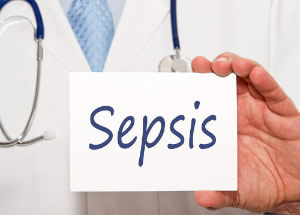
| SEPSIS is most often acquired in hospitals and has a fifty percent Death Rate |
| Sepsis is most often the result from infections acquired in healthcare facilities. Clinical diagnoses and treatment at an early stage is vital to the patient's survival as Sepsis infections are often resistant to antibiotics. Left misdiagnosed or ignored will lead to deteriorating patient health and death. Examples of these conditions are often found at Providence Saint Joseph Medical Center Burbank. |
 |
 |
| MENTAL HEALTH AWARENESS CAMPAIGN |
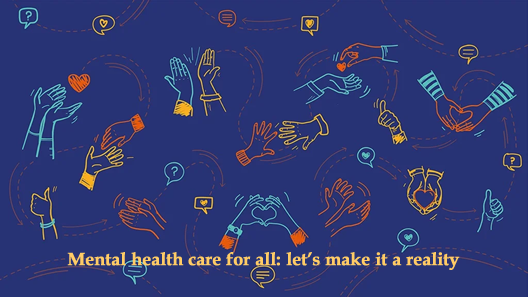 |
| The World Health Organization (WHO) held a World Health assembly in May of 2021, where global nation leaders recognized the need to reinvest in quality mental health services at all levels of care. This year’s World Mental Health Day slogan is "mental health care for all: let's make it a reality." The World Health Organization encourages everyone to highlight their own stories as part of local awareness activities. Resources and educational materials can be found at the World Health Organization's Web site at https://who.int |
| When seeking professional help make certain you consult with a licensed psychologist (PhD) or a licensed psychiatrist (MD). If you suspect someone may harm themselves, take them seriously. Remove any objects that could be used in a suicide attempt and Call the National Suicide Prevention Lifeline at 1-800-273-8255 or dial 911 and follow their guidance. Approximately seventy percent of those who die of suicide are men while twenty-five percent of men have attempted suicide (many, more than once). LGBT youth are four-times more likely to attempt suicide than any other youth groups and LGBT adults are six-times more likely to attempt suicide than other adults; while thirty percent of transgender adults have attempted suicide. Learn the warning signs and reach out to help those with suicidal thoughts or feelings. Links to a few resources that may be of interest: Canada Suicide Prevention Services, Public Health England Suicide Prevention, SPIF Suicide Prevention India Foundation, Suicide Prevention in Indigenous Communities, The Trevor Project, US Veterans Crisis Line. |
| BUGS, pets & YOU | |||
| In many countries around the world vector control keeps us healthy and safe, but in others it's a leading cause of death. All it takes is one flea, tick, or mosquito to create havoc for individuals and especially children. Join BBPA, the World Health Organization, and the Centers for Disease Control in promoting the need of vector control in our neighborhoods. The term vector which is used in science and mathematics is also a biological term to describe the causative organism for disease, typically carried by and transmitted by, an arthropod. Diseases include, but not limited to dengue, Japanese encephalitis, leishmaniasis, lyme disease, malaria, and yellow fever. Arthropods are characterized by bilateral symmetry, a hard jointed exoskeleton system, segmented bodies, and jointed paired appendages. Arthropods belong to the asylum arthropoda group in the animal kingdom which has over one million species. Most of us call an arthropod an insect. Mosquitoes are the best known insect and can be carrying a disease causing pathogen (vector-borne disease). Other insects (or arthropods) include ticks, flies sandflies, and fleas. Caregivers need to be their patient's advocate when it comes to air-borne diseases and the importance of keeping then safe, both inside an outside of living spaces. The caregiver and patient need to be current on all recommended vaccinations ass set forth by their local board of health. Caregivers need access to established vector control best-practices, and those procedures need to be a part of the patients health care plan. The following suggestions are for the caregiver and the patient. | |||
| 1. | Dress appropriately for the outing, wear long-sleeved shirts and long pants, the patient also needs feet and ankles covered. Do not use bright colors. | ||
| 2. | Be aware of what is in the air. When outdoors with your patient it is easier to recognize a possible vector problem when you see or hear a swarm of flying insects. In a swarm, the one single insect which can land quietly and quickly and stay long enough to pock the skin is more difficult to know it's there. | ||
| 3. | Use a repellant approved by the patient's doctor and applied according to the label instructions or the instructions of the physician. Make certain this is documented in the patients health care plan. Immediately wash off the repellant once you have returned home. | ||
| 4. | Don't go to areas where there is water, especially standing water. Avoid areas where you know has dead or dying trees and brush. A water source which has a lot of people and activities usually indicates that the water is safe and hat the surroundings are maintained which help to reduce the number of insects. | ||
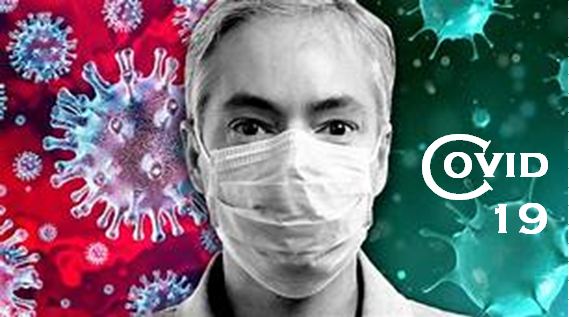 |
| CLICK ON THE IMAGE ABOVE FOR COVID 19 HEALTH |
| COVID-19 Caregiver Guidelines | COVID-19 Social Guidelines |
| Protocols for COVID-19 are just another chapter in the caregivers airborne pathogens handbook, the big difference is that much of what the caregiver must practice so does our global society. New responsibilities of a caregiver with regard to COVID-19 precautions have been amended to the "Characteristics of a Caregiver" resource available here. In a addition to duties as a caregiver, the carer must also adhere to the COVID-19 social guidelines. Caregivers have a civic and moral duty to follow the COVID-19 Best Practices and to be a role model for others so that they too will be a part of making the world healthier. Be proud that you are a caregiver and show everyone else how to protect themselves. |
Now more than ever, need to take care of and respect each other. The first step is to keep ourselves healthy. Second step is to help keep our family, friends, coworkers, the man on the street, the child in the playground, just about everyone healthy. Please keep in mind that these new social behavioral guidelines are not a punishment but a well thought out control system to help contain an airborne pathogen such as COVID-19 that at this point has no boundaries. You may be well today, but if socializing without a nose-mouth (and sometimes eyes) covering you may be sick tomorrow, and gone in a week. Generally accepted guidelines can be found along with other resources here. |
Information on this Web site provides visitors with information for knowledge, awareness, and correspondence. Do not use the resources on this Web site as a substitute for professional medical care and we urge you to work with your medical care providers for answers to your personal health questions. This Web site is copyright protected and content represents information deemed reliable and accurate at the time of posting; content aligned with goals of the organization. All branding images used as url links are the property of the organizations to which they point. Linking of third-party information may need prior approval of the author. |